
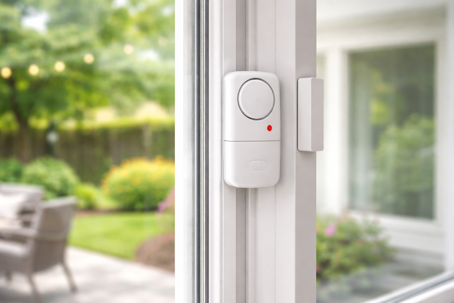
You probably feel a bit safer knowing your windows have alarms, especially if they still chirp every time you crack one open. That little beep can make it seem like your home is being watched closely. The reality is that many of those systems were installed years ago, and they are doing the same limited job they did on day one, even though the way we live, travel, and manage our homes has changed completely.
Across Ashburn, we see the same pattern. Neighborhoods grow, families add finished basements or sunrooms, and people start using smart locks, cameras, and streaming audio, while the original window alarms remain exactly as they were. Maybe you have had a false alarm or a sensor that sometimes trips and sometimes does not. Maybe a neighbor’s break-in or a home improvement project has you wondering whether your current window security would really respond the way you expect in a real incident.
At Integrated Media Systems, we have been designing and upgrading wired and smart security systems since 1979, with a background that includes both audio-visual integration and a Master Electrician’s License. That combination means we have seen multiple generations of window alarm technology in real Ashburn homes, from early wired contacts to modern smart sensors, and we know how they age. In this guide, we will walk through what an Ashburn window alarm upgrade can actually change for you, where older systems fall short, and how a professional, integrated approach creates security that fits the way you live today.
Why Ashburn Homeowners Are Rethinking Older Window Alarms
Most people do not start researching an Ashburn window alarm upgrade because they enjoy shopping for sensors. There is usually a trigger. Sometimes it is a string of false alarms that wake the family or bother neighbors. Other times, a neighbor has a break-in, a contractor notices old wiring during a renovation, or an insurance review raises questions about how current your security really is. These moments make you look at that old panel on the wall and wonder what is actually going on behind the scenes.
Many systems in Ashburn homes were installed 10, 15, or even 25 years ago. They were typically built around very simple magnetic contacts on the windows, wired back to a panel that could only give vague status messages like “Zone 3 Fault.” In practice, this often means several windows are grouped together, and if something goes wrong, you know a general area is involved but not exactly which window. If you have added windows during a remodel, finished a basement, or enclosed a porch, those new openings may never have been properly added to the original design.
The bigger issue is the gap between what those older systems can see and what modern intrusion attempts look like. A traditional contact only knows if the window is closed tightly enough to keep the magnet aligned. If someone shatters glass, pries a corner of the frame without moving the sash much, or carefully manipulates an older window that is already slightly misaligned, that contact may never change state. In other words, the alarm might stay quiet while something very serious is happening just a few feet away.
Because we have upgraded so many legacy wired systems in Northern Virginia, we regularly see 1980s and 1990s era contacts still in place. On paper they are “working” because the circuit closes when the window is shut. In reality, the wiring insulation can be brittle, contacts may be barely making connection, and several windows may not have been monitored properly for years. An Ashburn window alarm upgrade is often less about adding bells and whistles and more about closing these very real blind spots in the perimeter of your home.
What Modern Window Alarm Upgrades Actually Add To Your Security
A modern window alarm upgrade is not just a prettier keypad. The real change happens at the sensor level. Instead of relying only on a single magnetic contact that tells the system “open” or “closed,” you can use a combination of sensor types that watch for different kinds of activity at the window. This includes updated magnetic contacts, vibration or shock sensors that detect impact or prying, and glass-break detectors that respond to the sound or vibration pattern of breaking glass in a defined area.
A magnetic contact is simply a switch that closes a circuit when the window is shut. It is inexpensive and reliable, and it still plays a role in modern systems. The limitation is that it reacts only when the sash moves far enough to separate the contact and magnet. A shock sensor, by comparison, is tuned to feel a sharp vibration like someone banging or prying on the glass or frame. A glass-break sensor is designed to recognize the acoustic signature or shock pattern of glass shattering. When you combine these, your system can respond to attempts that never fully open the window.
These sensors feed into a modern control panel or hub that can handle more zones and communicate more clearly. Instead of seeing “Zone 3,” you can see “Kitchen sink window” or “Basement rear slider,” which makes it much easier to understand what is happening. Communication can be wired, wireless, or a mix of both, so we can cover windows that were difficult to reach when the house was first built. In Ashburn homes with lots of glass on the back of the house or walkout basements, this flexibility makes a real difference in coverage.
Consider a common scenario. Someone tests a rear basement window that is partly hidden behind landscaping. With an older contact, a firm push that rattles the glass might not trigger anything if the sash never moves enough. With an upgraded setup that includes a shock sensor, that same impact is likely to trigger an alarm or at least generate a meaningful alert. That extra layer changes the risk for anyone targeting your home and gives you earlier warning that something is not right around your windows.
Our team at Integrated Media Systems does not just swap sensors one for one. We test each new sensor at its actual window and verify how it behaves at the panel and in the app before we consider an upgrade complete. That system-level quality control is what makes the new equipment more than just a collection of gadgets. It becomes a cohesive perimeter that reacts consistently and gives you clear information when it matters.
Remote Access & Smart Home Integration For Ashburn Windows
Remote access is often the feature that finally convinces people to move forward with an Ashburn window alarm upgrade. Being able to glance at your phone and see whether every ground-floor window is closed, or which specific window is causing an alert, changes how you feel when you leave home or go to bed. Instead of guessing or walking room to room, you have a live view of the perimeter from wherever you are.
When we integrate window sensors with a modern controller, that controller can talk to a secure app on your phone or tablet. You can arm or disarm the system, bypass a specific window if you want to leave it cracked for fresh air, and receive real-time notifications if a sensor triggers while the system is armed. For Ashburn families that travel frequently or split time between home and a second property, that immediate visibility is a big shift from the old model where you only learned about issues because a siren went off or a neighbor called.
Integration with other smart systems is where things get even more powerful. Window sensors can tie into smart lighting so that if a ground-level window opens while the system is armed at night, specific exterior and interior lights turn on automatically. Cameras near those windows can start recording or send a snapshot, giving you both deterrence and documentation. In some homes, window status can work with motorized shades or audio-visual systems for daily convenience too, such as pausing media and bringing up lights in a room when a window is opened unexpectedly.
In Ashburn, many homes back onto trails, common areas, or wooded spaces. We often design window alarm integrations that account for those unique sightlines. For example, a rear walkout basement might trigger backyard floodlights and a deck camera when a window sensor trips, while front windows might activate porch lighting and an entry camera. Because Integrated Media Systems has spent decades integrating lighting, audio-visual, and security, we can build automations that fit the actual layout and patterns of life in your home, rather than forcing you into a one-size-fits-all script.
Remote access is not just about convenience. It shortens your reaction time when something is wrong and reduces the friction of using your system correctly every day. When the system is easier to manage and understand, families are more likely to arm it consistently, which is one of the simplest and most overlooked ways to get real value from any window alarm upgrade.
Reducing False Alarms & Everyday Hassle With A Thoughtful Upgrade
One of the biggest frustrations we hear from Ashburn homeowners with older window alarms is the constant battle with nuisance alerts. A single misaligned contact can cause the system to show a window as “open” even when it is latched, forcing you to wiggle the sash or ignore the panel warning. Over time, people lose confidence in the system and either stop using it regularly or live with frequent beeps and faults as background noise.
False alarms have several common causes in aging systems. Window frames can settle and shift, changing the gap between the contact and magnet so they only connect intermittently. Contacts themselves can corrode, especially in areas with condensation, which increases resistance in the circuit. Wiring that was stapled too tightly decades ago can break inside the wall, leading to a circuit that appears stable one day and open the next. None of these issues necessarily mean a dramatic failure, but together they create a system you do not fully trust.
Modern sensors and panels give us more ways to reduce that noise. Updated contacts are usually more tolerant of minor alignment changes, and better adhesives and mounting methods help keep them in place. Panels with more detailed zone information let us separate windows more intelligently, so a problem affects fewer openings and is easier to track down. In addition, smarter logic at the panel level can distinguish between a brief, harmless vibration and a more sustained impact on a window, which helps cut unnecessary triggers from everyday bumps.
Usability also improves dramatically with an upgrade. Instead of a cryptic code, you can see a plain-language name like “Guest room left window,” know exactly where the issue is, and choose to bypass it temporarily if needed. If a window sensor starts acting up the night before a trip, you can secure that window mechanically, bypass that one zone, and schedule service, rather than disarming the entire house just to get peace and quiet. For a family trying to get out the door on time, that level of control matters.
Because we at Integrated Media Systems perform comprehensive quality control on every upgraded system before we leave, we deliberately look for the misaligned contacts, weak signals, and mislabeled zones that typically cause false alarms. We trigger each window sensor at the window itself, confirm the panel and app show the right label, and check for stable readings. This up-front effort reduces the day-to-day hassle for you and helps rebuild confidence that when your upgraded system alerts, it is for a good reason.
Can Your Existing Window Wiring & Sensors Be Reused?
One of the first questions people have about an Ashburn window alarm upgrade is whether they are looking at a full rip-and-replace or something more targeted. The honest answer is that it depends on the age and condition of your wiring and devices, along with the capability of the existing panel. A professional assessment can tell you which pieces are worth keeping and where new hardware will give you the biggest improvement.
In many homes, the low-voltage wiring that runs from windows back to the panel is still usable, even if the contacts themselves are outdated. We can test those runs by checking continuity and resistance, making sure the circuits are stable and not compromised by hidden breaks. If the wiring tests well, we can often replace old contacts with modern versions and land them on a new panel that supports better zoning and remote access. This approach allows you to benefit from today’s technology while avoiding unnecessary work inside finished walls.
There are cases, however, where reusing wiring or sensors is not a good idea. If we find that certain runs have intermittent faults, damaged insulation, or have been spliced poorly during past repairs, it may be more reliable to replace them or supplement them with wireless sensors. In finished basements or spaces with elaborate trim or built-ins, we may recommend a hybrid approach that keeps solid existing wiring and adds wireless devices where pulling new cable would cause too much disruption.
Every Ashburn home has its own aesthetic considerations. Large window walls, custom woodwork, and recently renovated basements all require careful planning so that new sensors are both effective and discreet. Because Integrated Media Systems holds a Master Electrician’s License and has long experience with both electrical and low-voltage work, we can evaluate the full picture. We are able to route power, handle panel upgrades, and integrate with existing electrical infrastructure without bringing in multiple contractors, which simplifies the project for you.
The goal is not to push the most complicated option but to build a reliable, maintainable system that respects your home. Reusing good wiring and thoughtfully adding new sensors where they are needed often strikes the best balance between cost, performance, and minimal disruption during your window alarm upgrade.
Comparing DIY Kits To Professionally Integrated Window Alarm Upgrades
Big-box stores and online retailers offer many DIY window alarm kits, and some of them work well for certain situations. If you live in a small space with a simple layout and only a few windows to monitor, a basic wireless kit can provide a first layer of protection at a relatively low cost. The challenge is that Ashburn homes often have more complex floor plans, multiple levels, and a mix of old and new construction that is harder to cover effectively with a one-size-fits-all kit.
DIY systems typically include a small number of wireless contacts and a basic hub. They may or may not integrate cleanly with your other smart devices, and they usually rely on batteries and radio range that can be stretched thin in larger homes. Coverage gaps can appear around basement windows, garage entries, or rooms that were added later. When something goes wrong, you are also the one diagnosing whether it is a weak signal, a bad battery, or interference from another device in the house.
A professionally integrated Ashburn window alarm upgrade takes a different path. Instead of starting with a box of parts, the process starts with a walk-through of your property, identifying which windows are most at risk, where wiring exists, and how people move through the space daily. From there, we design a mix of wired and wireless sensors, glass-break coverage where appropriate, and clear zoning that gives you per-area visibility. The result is a system laid out for your home, not the sample floor plan in a manual.
There are also long-term considerations. DIY kits can be fine if your needs are static, but as you add cameras, smart lighting, or audio-visual systems, integration may become limited or messy. Professionally integrated systems are chosen and configured with growth in mind, so adding a new wing, finishing an attic, or tying in more devices does not require starting over. At Integrated Media Systems, our history with large-scale audio-visual and electrical integration informs even smaller residential projects, which helps us avoid dead ends that look good today but cause headaches two years from now.
The point is not that DIY is always wrong, but that it is rarely the best fit for a multi-level Ashburn home with varied window types, existing wiring, and a desire for smooth integration. If you want a system that you can trust for the long haul, with clear visibility and support, a professionally designed and installed window alarm upgrade usually delivers a different level of reliability and usability than a kit you install on a weekend.
What An Ashburn Window Alarm Upgrade Project Looks Like Step By Step
Knowing what to expect from the upgrade process can make the idea feel far more manageable. It usually begins with a conversation about your current system, your concerns, and any future plans for the home. From there, we schedule an on-site walk-through to see your existing panel, wiring, and windows, and to understand how your family uses each area. This is where we note things like finished basements, window walls facing common areas, and bedrooms that might need quieter operation at night.
After that visit, we outline a design that maps each window and group of windows to specific sensor types and zones. For example, high-risk basement egress windows might get both contacts and shock sensors, while upper-story windows in low-traffic areas might only need updated contacts. We also decide how zones will be named and grouped so that the app and panel show intuitive labels you can understand without a manual. At the same time, we plan how the upgraded window alarms will integrate with any lighting, cameras, or other smart devices you already have or plan to add.
The installation phase is where the physical work happens. Depending on the scope, this might involve replacing the main control panel, updating or adding window sensors, and configuring wireless links where needed. We work carefully around existing finishes, furniture, and decor to keep disruption to a minimum. Where new wiring is needed, we look for paths that avoid visible damage and coordinate with you around any areas that require special care, such as custom woodwork.
Once the hardware is in place, testing and training are the final critical steps. We go window by window, triggering each sensor and confirming the correct zone names on the panel and app. We check for stable signals and verify that any automations involving lighting or cameras behave as planned. Only after this quality control is complete do we sit down with you for a walkthrough, showing how to arm, disarm, bypass zones, read alerts, and manage the system day to day. Because Integrated Media Systems performs a full quality control check on every system before we call it finished, you start using your upgraded window alarms with confidence rather than guesswork.
Is Now The Right Time To Upgrade Your Ashburn Window Alarms?
Deciding when to move forward with an Ashburn window alarm upgrade often comes down to a few clear signs. If your panel cannot show individual window status, only generic zone numbers, or if you routinely ignore fault messages because they are hard to interpret, that is a strong indicator your system is behind. Frequent false alarms, mysterious beeps, or sensors that only work when you jiggle the window are other signals that the underlying hardware and wiring are past their prime.
It is also smart to think about timing in relation to other projects. If you are replacing windows, finishing a basement, or adding a new room, those are ideal moments to revisit your window alarm layout. Running new wiring or placing new sensors is simpler while walls are open or trim is being updated. Likewise, if you are adding or expanding smart home features like lighting control, whole-house audio, or cameras, coordinating a window alarm upgrade at the same time can give you a more cohesive, reliable system.
The best way to know for sure what you need is to have an integrated provider walk the space with you and evaluate the existing equipment. Sometimes we find that targeted improvements, like upgrading certain sensors and the panel, will give you most of the benefit. In other cases, a broader refresh makes more sense. At Integrated Media Systems, we look at your window alarms in the context of your entire home technology picture, so any recommendations support both your current needs and the way you expect to live in the house over the next several years.
Plan Your Ashburn Window Alarm Upgrade With An Integrated Team
An effective window alarm system should do more than chirp when you open a sash. It should give you a clear view of what is happening around your home, react intelligently to real threats, and fit smoothly into the way you already use technology every day. For many Ashburn homeowners, upgrading an older system is the difference between hoping the alarm will work when needed and knowing exactly how it will respond.
If you see your own home in the situations we have described, this is a good time to get a professional opinion. A tailored assessment from Integrated Media Systems can show you what your current window alarms are really doing, where the blind spots are, and what an upgrade could look like using a combination of modern sensors, remote access, and smart integration. We combine decades of integrated electrical and technology experience with a careful, step-by-step process so your Ashburn window alarm upgrade is both practical and future-ready.
Call (703) 420-5434 to talk with our team about the right window alarm upgrade for your Ashburn home.