
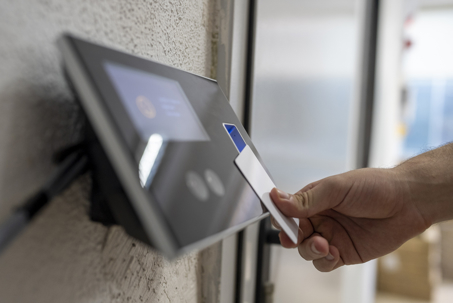
Managing who can enter your building is one of those responsibilities that seems simple—until something goes wrong.
An employee leaves without returning their key. A cleaning crew needs after-hours access. A manager has to drive across town just to unlock a door for a contractor. These situations happen every day, and traditional lock-and-key systems often make them harder to manage than they need to be.
A commercial access control system gives business owners more visibility and control over their facilities without relying on physical keys alone. Whether you manage a warehouse, office building, retail space, or multifamily property, modern access management can help simplify day-to-day operations while improving security.
Why Traditional Keys Become a Problem as Businesses Grow
Physical keys work well for small operations, but they can quickly become difficult to manage as teams expand.
Consider a common situation: an employee leaves the company and fails to return their key. You now have to decide whether to accept the risk or pay to rekey multiple locks throughout the building.
The problem becomes even more complicated when several employees, vendors, or contractors need different levels of access.
Common challenges include:
- Lost or misplaced keys
- Unauthorized key duplication
- Rekeying expenses
- Difficulty tracking who has access
- Delays when access needs change
Unlike traditional keys, electronic credentials can be updated or removed without replacing locks throughout the property.
Knowing Who Entered—and When
For many businesses, security isn't just about keeping doors locked. It's also about accountability.
A traditional key can open a door, but it doesn't tell you who used it.
With a commercial access control system, every credential use is recorded automatically. Managers can review activity logs that show when a door was accessed, where it occurred, and which credential was used.
This information can be valuable in situations such as:
- Investigating inventory discrepancies
- Reviewing after-hours activity
- Monitoring restricted areas
- Verifying vendor access
- Resolving workplace disputes
Instead of relying on assumptions, you have a record of what happened.
Not Every Employee Needs Access to Every Area
Most businesses have areas that require additional control.
A receptionist may need access to the front office but not the server room. A warehouse employee may need access to inventory areas but not accounting offices.
Access control systems allow businesses to assign permissions based on job responsibilities.
For example, you can:
- Restrict access to sensitive areas
- Limit access during certain hours
- Create temporary credentials for vendors
- Adjust permissions when employees change roles
This helps reduce unnecessary access while making daily operations more efficient.
What Happens When an Employee Leaves?
One of the biggest advantages of electronic access control is how quickly permissions can be changed.
With traditional keys, a lost key or unexpected employee departure often creates an immediate security concern.
With access control, administrators can deactivate a credential within seconds.
The former employee no longer has access, and the rest of the system remains unchanged.
For businesses that experience employee turnover, this alone can eliminate a significant amount of administrative work and expense.
Which Businesses Benefit Most From Access Control?
Many business owners assume access control systems are only designed for large corporations.
In reality, a wide range of facilities can benefit from controlled entry management.
Common examples include:
- Office buildings
- Warehouses and distribution centers
- Multifamily communities
- Medical facilities
- Retail stores
- Construction sites
- Industrial properties
- Property management companies
Throughout San Diego County, businesses in areas such as El Cajon, Escondido, La Jolla, and surrounding communities often use access control to manage employee access, vendor entry, and facility security more efficiently.
A System That Can Grow With Your Business
Many businesses start small and expand over time.
Modern access control systems are designed to grow alongside those changes.
You may begin with a few secured doors today and add additional readers, credentials, and locations later. Cloud-based platforms can even allow managers to oversee multiple facilities from a single dashboard.
This flexibility helps businesses avoid replacing entire systems as their needs evolve.
Smarter Access Management Starts With the Right System
Security is no longer just about locking doors. Today's businesses need practical ways to manage employees, contractors, vendors, and visitors while maintaining visibility across their facilities.
A properly designed commercial access control system can help reduce administrative headaches, improve accountability, and give business owners greater control over who enters their property.
At Integrated Media Systems, we design and install commercial access control systems tailored to the needs of businesses throughout the area. Whether you're securing a single office or managing multiple facilities, our team can help you evaluate your options and build a solution that fits your operation.
To discuss your facility's access control needs, call (703) 420-5434 or schedule a consultation today.